IVF Center In Malviya Nagar Jaipur: Lab Tech Matters


Written and medically reviewed by
Dr. Urmila Sharma and Dr. Zeepee Godha
6 min read
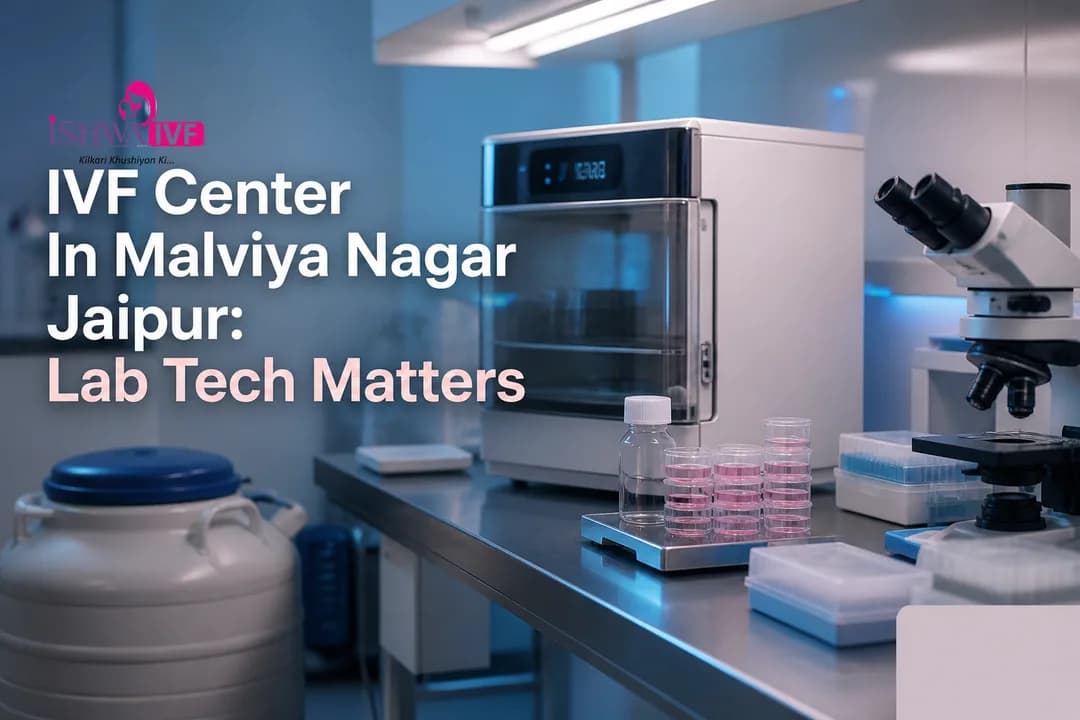
IVF Center In Malviya Nagar Jaipur: Lab Tech Matters is not just a headline. It reflects what couples learn quickly during IVF: outcomes depend on the lab as much as the doctor. If you are comparing an IVF Center in Jaipur, this guide explains which lab technologies actually matter, how they protect embryos, and what questions to ask before you start.
Why Lab Quality Shapes Outcomes More Than You Think
First, remember that IVF is a chain of small steps. Each step adds risk or reduces it. Because of that, the lab becomes the “engine room” of the cycle. It controls temperature, air quality, handling time, and culture conditions.
In addition, many couples focus only on the procedure day. Yet most of the critical work happens in the days between egg retrieval and embryo transfer. During that window, lab consistency decides whether embryos keep developing or stall.
In our day-to-day work with infertility treatment planning, we repeatedly see one pattern. Couples feel calm when the clinic explains lab workflows in plain language. On the other hand, they feel anxious when the lab sounds like a black box. That difference affects trust and follow-through.
IVF Center In Malviya Nagar Jaipur: Lab Tech That Matters
Second, it helps to know which technologies bring real control and which are just buzzwords. A strong IVF Center will connect each tool to a specific risk it reduces. That is exactly how you should evaluate a Fertility Clinic.
Embryology Lab Environment: Air, Temperature, and Stability
Importantly, embryos are sensitive to shifts in pH, temperature, light, and volatile compounds. Therefore, modern IVF labs focus on stability and clean air. Many labs use HEPA and activated carbon filtration to reduce particulates and VOCs.
Similarly, strict temperature management matters during egg handling and ICSI. Even brief exposure to lower temperatures can stress oocytes. So, ask how the lab reduces “out-of-incubator” time during sperm selection and microinjection.
Notably, the World Health Organization outlines laboratory quality and safety principles for assisted reproduction. You can review WHO’s broader guidance on quality and safety in health services via World Health Organization resources.
Culture Systems and Incubators: Creating a Predictable Micro-World
Next, ask what type of incubators the lab uses and why. Benchtop incubators often reduce door openings. As a result, they help maintain gas balance and temperature. That stability supports embryo cleavage and later-stage development.
In addition, labs may use sequential culture media or single-step media. Each approach has trade-offs. Sequential media changes match embryo needs by day. Single-step media reduces handling. A careful team chooses based on workflow and embryo monitoring.
To illustrate, blastocyst culture typically extends growth to day 5 or 6. It can help select embryos with stronger developmental potential. However, not every cycle should aim for blastocyst transfer. For some patients, earlier transfer may fit better. Your Fertility Specialist should explain the rationale.
ICSI Micromanipulation: Precision for Male Infertility
Furthermore, ICSI helps when sperm count, motility, or morphology limits fertilization. The lab selects a single sperm and injects it into the egg. That precision depends on calibrated micromanipulators and a steady embryologist hand.
Because of this, you should ask how the clinic audits fertilization rates and oocyte survival after ICSI. Good labs track these KPIs internally. They also investigate any unexpected dips. That is a sign of mature quality management.
When ICSI Helps Most
For example, ICSI often supports severe male infertility, previous fertilization failure, or surgically retrieved sperm. Still, it is not “better IVF” for everyone. Therefore, your Fertility Doctor should recommend it based on semen analysis, history, and prior cycle data.
How To Judge a Lab Without Being a Scientist
Third, you can evaluate lab quality using simple, practical questions. You do not need to understand every parameter. Instead, you need clarity on controls, documentation, and communication.
Meanwhile, remember an honest clinic will discuss limits. IVF success rates vary by age, ovarian reserve, sperm factors, and uterine health. So, any clinic promising guaranteed results should raise a red flag.
- Ask about witnessing protocols: How do they confirm patient identity at each step?
- Ask about embryo grading: Do they show images and explain grading in plain terms?
- Ask about culture strategy: Day-3 vs blastocyst, and why it fits your case.
- Ask about cryostorage: How do they store and track embryos or eggs long-term?
- Ask about incident reporting: What happens if equipment alarms or parameters drift?
In addition, ask how the lab communicates updates. For many couples, short, predictable touchpoints reduce stress. That matters during the two-week wait and during frozen embryo transfer planning.
From Egg Freezing To Embryo Freezing: Where Tech Protects Your Options
Finally, lab technology is not only about today’s transfer. It also protects future options through fertility preservation. That includes egg freezing and embryo freezing, which many couples choose after retrieval.
Notably, vitrification is the common modern freezing method. It cools cells very rapidly to reduce ice crystal formation. Because of this, it improves post-thaw survival compared to older slow-freeze methods.
For a verifiable benchmark, a widely cited review reports high oocyte survival after vitrification in experienced programs. For instance, an overview in PubMed indexed literature on oocyte vitrification discusses survival and clinical outcomes across studies. Still, outcomes depend on age at freezing and lab expertise.
Similarly, embryo freezing supports spacing pregnancies, reducing ovarian hyperstimulation risk, and planning transfer around endometrial readiness. However, you should discuss whether a fresh transfer or frozen transfer suits your hormone profile and uterine lining.
Moreover, if your doctor recommends PGT testing, ask how the lab performs biopsy and how it coordinates with the genetics laboratory. Genetic testing can help in selected cases, such as recurrent miscarriage. Yet it may not improve outcomes for every patient. Therefore, individualized counselling matters.
Choosing the Right IVF Center: Practical Local Checklist
When you search for an IVF Center in Malviya Nagar Jaipur or nearby areas, focus on what you can verify. First, evaluate whether the clinic explains its process clearly. Second, check whether the team discusses alternatives like IUI, ovulation induction, or timed intercourse when appropriate.
In addition, look for coordinated care beyond the lab. Many couples need gynecology services, thyroid or metabolic evaluation, and male infertility workups. A clinic that integrates these steps often reduces delays.
At Ishwa IVF, we see that couples feel more in control when they understand the “why” behind each step. Therefore, we explain what each lab step protects: fertilization, embryo development, or implantation timing. We also outline what you can influence, like medication adherence and follow-up visits.
If you want to learn about fertility services and care pathways, you can also explore patient-facing health system information via National Health Authority resources. While not IVF-specific, it offers helpful context on healthcare access and programs.
In short, choose a clinic that treats you like a partner in the plan. That means transparent lab updates, clear next steps after each report, and realistic expectations about IVF success rates.
As you decide, keep one idea central. The best IVF plan blends medical judgment with lab consistency and compassionate communication. If “IVF Center In Malviya Nagar Jaipur: Lab Tech Matters” matches your priorities, consider booking a consultation to review your reports and options without pressure.
Contact Us
Ishwa IVF Clinic
1st Floor, Ganga Heights, Tonk Road
(Near Gopalpura Flyover, Opposite Jaipur Hospital)
Kailash Puri Colony, Jaipur – 302018
📞 Phone: 9351333705
For couples who prefer evidence-based guidance, our team shares practical experience from daily fertility care and lab coordination. You can also explore Ishwa IVF and read more patient resources from our fertility care team. Results vary by individual factors, so we will review your history and explain realistic options before you decide.
Written and medically reviewed by Dr. Urmila Sharma and Dr. Zeepee Godha. This article is general information and does not replace a consultation. Your doctor will advise you on your own situation.