
Overview
Modern freezing by vitrification preserves embryos very well, and most frozen blastocysts survive thawing. For many women, the chance of pregnancy from a frozen transfer is similar to a fresh one.
Why a frozen transfer is used
- Surplus embryos from a fresh cycle can be used later, for another try or a second child
- Lower risk of OHSS: freezing all embryos avoids pregnancy in the same cycle as a strong ovarian response
- Genetic testing: embryos are frozen while PGT results are awaited
- A better-prepared lining when the endometrium was not ready during stimulation
- Medical or personal timing, such as illness, travel or surgery
How the uterus is prepared
- Natural cycle
For women with regular periods: ultrasound tracks natural ovulation and the transfer is timed to it. - Hormone-prepared cycle
Oestrogen tablets build the lining over about two weeks, then progesterone prepares it for implantation. This is convenient and easy to plan, and suits women with irregular cycles.
The transfer day
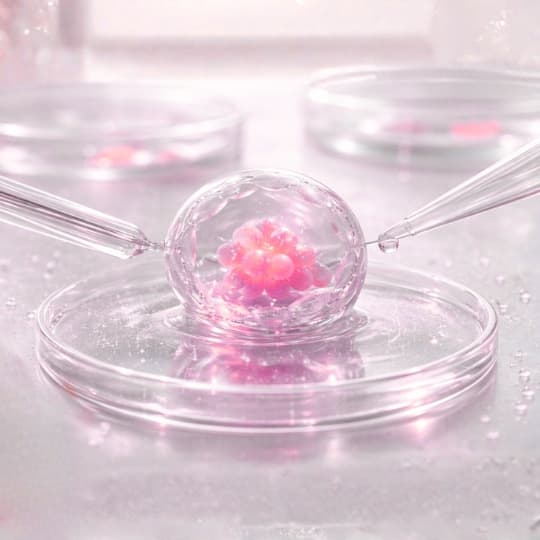
The embryo is thawed in the lab on the morning of transfer and its survival is checked. The transfer itself takes a few minutes, needs no anaesthesia and feels like a routine internal examination. You can go home soon after and return to normal, gentle activity.
After the transfer
You continue hormone support as advised. A blood pregnancy test (beta hCG) is done about 9 to 11 days after a blastocyst transfer. If it is positive, hormone support usually continues until the end of the first trimester.
Embryo freezing and storage at Ishwa IVF
- Embryos vitrified and stored in our own laboratory
- Clear records and consent for every stored embryo
- Advice on how many embryos to transfer, to keep the risks of a twin pregnancy low
Questions about frozen embryo transfer
Is a frozen embryo transfer as successful as a fresh one?
For many women it is similar, and in some situations, such as a strong ovarian response, it may be better. Success depends mostly on the age at which the eggs were collected and the quality of the embryo.
How long can embryos stay frozen?
Vitrified embryos remain stable for many years. Storage is renewed periodically, and the law in India sets rules on storage periods and consent.
Do all embryos survive thawing?
Most vitrified blastocysts survive thawing. Embryos are thawed on the morning of the transfer, and the embryologist confirms survival before it goes ahead.
Is a frozen embryo transfer painful?
No. It is similar to a smear test, takes a few minutes and does not need anaesthesia.
When can I do the pregnancy test?
A blood beta hCG test about 9 to 11 days after a blastocyst transfer. Home urine tests done earlier can be misleading.