Reproductive Health in Jaipur: When to See IVF Doctor


Written and medically reviewed by
Dr. Urmila Sharma and Dr. Zeepee Godha
8 min read

If you are worried about delayed conception, Reproductive Health in Jaipur: When to See IVF Doctor is a practical guide to help you decide your next step. In many cases, IVF is not the first treatment, but timely evaluation can prevent months of stress and missed chances. Here you will learn the common warning signs, the right time to meet a fertility specialist, and what to expect from testing and treatment options in Jaipur.
Why Timing Matters for Fertility and Reproductive Health
First, it helps to know that fertility changes with age for both partners. In women, egg quantity and egg quality tend to decline over time. Because of that, waiting too long can reduce the benefit of simpler options like ovulation support or IUI.
Importantly, infertility is common and often treatable. The World Health Organization (WHO) infertility fact sheet notes that infertility affects a significant share of people worldwide and highlights the need for accessible fertility care. Therefore, early guidance can save time and reduce emotional strain.
In our day-to-day work with couples at Ishwa IVF, we repeatedly see one pattern. Many people delay a specialist visit because they assume stress alone caused the delay. However, when we evaluate early, we often identify a clear, fixable reason, such as thyroid imbalance, ovulation issues, or semen parameters that need attention.
Reproductive Health in Jaipur: When to See IVF Doctor
Second, you can use simple timelines to decide when to seek help. If you are under 35 and have tried for 12 months with regular unprotected sex, a fertility clinic visit makes sense. If you are 35 or above, consider evaluation after 6 months. Notably, you should seek help sooner if you have known risk factors.
Also, do not wait if you have irregular cycles, very painful periods, or a history of pelvic infection. Similarly, if the male partner has a history of mumps orchitis, testicular surgery, or chemotherapy, early testing becomes even more useful. As a result, you can plan targeted treatment rather than guessing.
Warning Signs You Should Not Ignore
To make this clearer, here are common signs that should prompt a fertility specialist appointment. These signs do not confirm infertility, yet they do justify evaluation. Moreover, early action often opens up more options.
- Irregular or absent periods, which may suggest ovulation problems or PCOS.
- Severe period pain or pain during intercourse, which can point to endometriosis.
- Repeated pregnancy loss (two or more), which needs a structured workup.
- Known fibroids or uterine polyps, which can affect implantation.
- Low sperm count or motility on any prior report, even if it was “borderline.”
- Past pelvic surgery or infections, which can affect tubes or ovarian reserve.
In addition, consider an earlier visit if you plan delayed parenthood due to career, travel, or personal reasons. Fertility preservation such as egg freezing or embryo freezing may fit some situations. However, only a personalised assessment can confirm what is appropriate.
When IVF Is Considered, and When It Is Not
Many couples assume that a fertility clinic means immediate test tube baby treatment. In reality, a good fertility specialist first tries to identify the simplest effective path. For example, timed intercourse with ovulation tracking may work for mild ovulatory issues. Next, IUI can help selected couples with unexplained infertility or mild male factor.
However, IVF often becomes the best option when tubes are blocked, sperm parameters are significantly reduced, or prior treatments fail. Similarly, IVF can support fertility preservation and certain genetic testing pathways. Still, results vary depending on age, diagnosis, egg reserve, sperm quality, and embryo development.
Key Idea: Match the Treatment to the Diagnosis
Importantly, IVF is a tool, not a universal answer. Therefore, you should expect your doctor to explain the “why” behind each step. A transparent plan builds trust and helps you stay steady during treatment.
What to Expect at Your First Fertility Clinic Visit
First, expect your doctor to take a detailed history for both partners. That includes cycle patterns, past pregnancies, contraception history, lifestyle, medications, surgeries, and any chronic illnesses. Next, your specialist may recommend tests timed to your cycle.
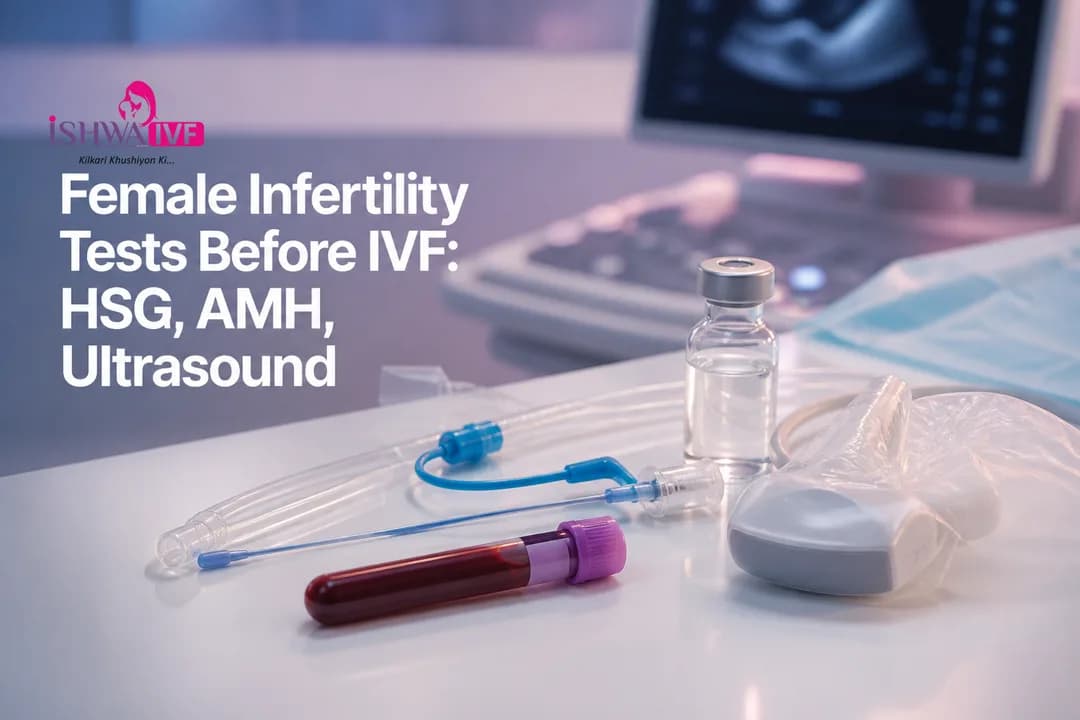
For women, the basic evaluation often includes pelvic ultrasound, ovarian reserve markers, and hormone checks. For men, semen analysis remains the core first test. In addition, your doctor may advise a thyroid profile, prolactin levels, or tests for infections based on symptoms.
Furthermore, many couples feel nervous about tests. That feeling is normal. Yet a structured workup often brings relief, because it replaces uncertainty with a plan.
Core Tests and How They Guide Treatment
To illustrate, here is how common tests influence the treatment path. These are not “good” or “bad” tests. Instead, they help personalise the approach.
- Transvaginal ultrasound to assess antral follicle count, uterine lining, fibroids, or polyps.
- AMH and other ovarian reserve markers to estimate response to stimulation protocols.
- Ovulation tracking using follicular scans or progesterone timing, especially with irregular cycles.
- Tubal assessment when history suggests blockage or prior infection.
- Semen analysis to evaluate count, motility, and morphology before planning IUI, IVF, or ICSI.
Moreover, if a couple has recurrent pregnancy loss, your doctor may suggest targeted evaluations. Those can include uterine cavity checks or clotting and hormonal assessments, based on the clinical story. Therefore, you get answers that relate to your situation, not a generic bundle.
IVF in Jaipur: Treatment Paths Like IUI, ICSI, and Preservation
Once testing clarifies the cause, your specialist will discuss options. Sometimes, lifestyle and medical optimisation can significantly help. Other times, assisted reproduction offers the best balance of speed and success chances.
For example, IUI places processed sperm inside the uterus around ovulation. This can help when the issue is mild male infertility or unexplained infertility. On the other hand, IVF involves stimulating ovaries, retrieving eggs, fertilising them in a lab, and transferring an embryo to the uterus.
In particular, ICSI can help severe male infertility. During ICSI, an embryologist injects a single sperm into an egg under a microscope. You can learn more from the WHO laboratory manual for semen analysis, which outlines standards used for semen evaluation and supports evidence-based male infertility care.
Also, fertility preservation plays a growing role. Egg freezing helps women who want to protect future options before age-related decline or medical treatments. Similarly, embryo freezing can support planned family building and allows flexible timing for transfer. In addition, modern embryo freezing methods typically use vitrification, a rapid freezing technique used across IVF labs.
To make decisions easier, discuss these practical points with your doctor:
- Diagnosis: What is the main cause, and is it one-sided or combined factor?
- Time: How urgent is treatment based on age and ovarian reserve?
- Options: What are the realistic alternatives to IVF or ICSI in your case?
- Risks: What side effects can happen, and how do you reduce them?
- Plan: What does a cycle timeline look like from stimulation to pregnancy test?
Notably, IVF success rates vary widely. Your personal prognosis depends on factors your doctor can explain after the first evaluation. Therefore, focus on understanding your specific situation rather than comparing stories online.
Choosing the Right Fertility Doctor and Pregnancy Care Support
First, look for a fertility specialist who explains options in simple language. A good clinic will share how they monitor stimulation, manage egg retrieval safety, and support embryo culture. In addition, ask how they handle male infertility and whether they coordinate care with andrology and advanced lab services.
Second, consider the full journey, not only conception. Many patients need gynecology support for PCOS, endometriosis, fibroids, or thyroid issues. Similarly, once pregnancy happens, some couples need pregnancy care planning, especially after a long infertility journey.
At Ishwa IVF, we often support patients beyond the procedure itself. For instance, we guide medication timing, nutrition basics, and stress coping tools during the two-week wait. Moreover, we coordinate follow-ups so patients do not feel lost after embryo transfer.
Also, some pregnancies need closer monitoring. High risk pregnancy care may be relevant for advanced maternal age, twin pregnancies, diabetes, hypertension, thyroid disease, or prior pregnancy complications. Because of this, it helps to choose a centre that can coordinate fertility treatment and follow-up pregnancy care.
For trustworthy health guidance, you can also explore patient education resources on National Health Authority (NHA) official information, which supports awareness of healthcare access and public health initiatives in India. However, your doctor should tailor decisions to your medical history.
Finally, keep expectations realistic and kind to yourself. Even with strong lab processes, not every cycle leads to pregnancy. Therefore, a transparent clinic will discuss next steps early, including when to consider repeat cycles, protocol changes, or additional testing.
In short, Reproductive Health in Jaipur: When to See IVF Doctor comes down to one idea. Get evaluated early enough to keep choices open, and then choose a plan that matches your diagnosis and timeline. If you want a calm, evidence-based conversation about IVF, IUI, ICSI, or fertility preservation, our team at Ishwa IVF can guide you without pressure, drawing on hands-on experience from daily fertility practice.
Contact Us
Ishwa IVF Clinic
1st Floor, Ganga Heights, Tonk Road
(Near Gopalpura Flyover, Opposite Jaipur Hospital)
Kailash Puri Colony, Jaipur – 302018
📞 Phone: 9351333705
Ishwa IVF supports couples with advanced fertility treatment and compassionate care. If you are ready, you can also explore fertility services and appointment guidance to plan your first visit.
Written and medically reviewed by Dr. Urmila Sharma and Dr. Zeepee Godha. This article is general information and does not replace a consultation. Your doctor will advise you on your own situation.