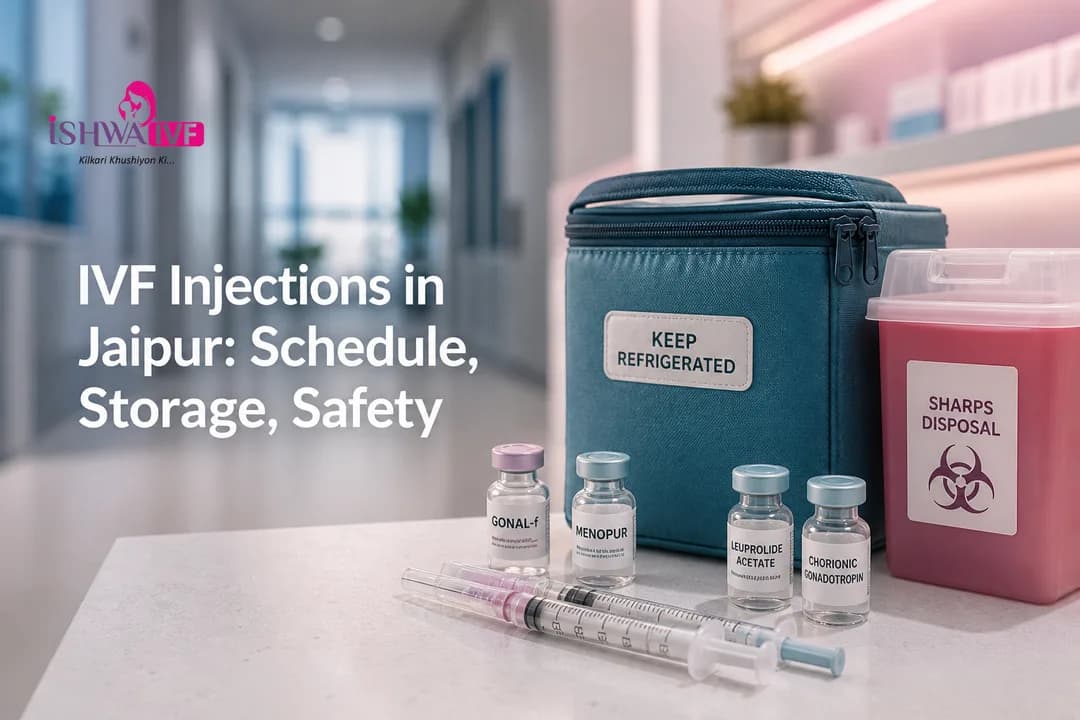
IVF Injections: Schedule, Sites, Storage Tips


Written and medically reviewed by
Dr. Urmila Sharma and Dr. Zeepee Godha
7 min read
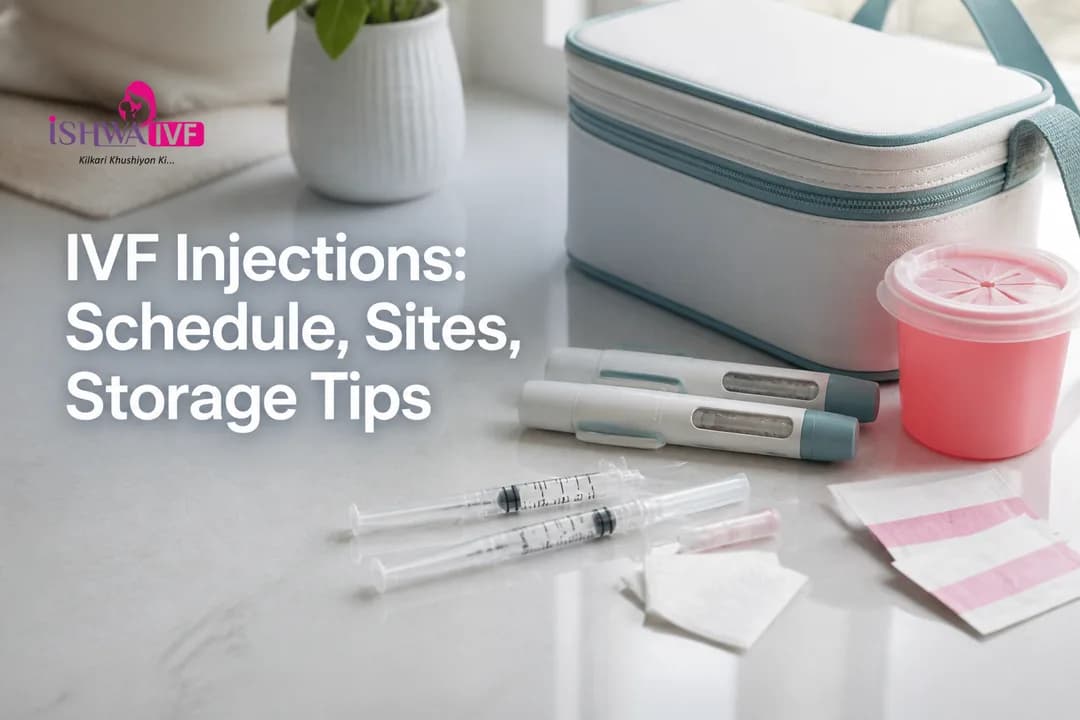
“IVF Injections: Schedule, Sites, Storage Tips for Success” is the practical part of IVF many people fear most. IVF injections can feel overwhelming at first. However, with a clear plan, the right injection sites, and safe medication storage, most patients gain confidence within days. In this guide, you will learn how the timing works, where to inject, how to store each medicine, and what to do if something goes off-schedule.
Why IVF Injections Matter in Fertility Treatment
IVF uses injectable medicines to support follicle growth, prevent premature ovulation, and prepare the uterus. As a result, your fertility doctor can control key steps of the cycle. That control helps your IVF center plan monitoring scans and blood tests. It also helps schedule egg retrieval and embryo transfer with precision.
Importantly, injection protocols differ for each person. Age, AMH, PCOS, endometriosis, and previous cycle response can all change the plan. Therefore, your fertility specialist may adjust doses after scans. That flexibility is normal, and it often improves IVF success rates over time.
In our work at Ishwa IVF, a pattern we repeatedly see is that “missed timing” is usually a systems problem, not a patient problem. For example, alarms, a written chart, and a pre-filled travel kit prevent most mistakes. Once patients build a routine, anxiety drops and adherence improves.
What Medicines Are Common in IVF and ICSI Cycles?
Most IVF and ICSI cycles include ovarian stimulation injections, plus medicines to prevent early ovulation. Next, a “trigger” shot helps mature eggs before retrieval. After that, progesterone support often continues into early pregnancy care if your test is positive.
Clinics may use brand-specific medications. Still, categories stay similar. For instance, gonadotropins stimulate follicles. Meanwhile, antagonists or agonists control the LH surge. Your infertility treatment plan may also include tablets, patches, or nasal sprays.
Why the Same Protocol Does Not Fit Everyone
Two patients can start with the same diagnosis and still respond differently. Therefore, your fertility doctor watches follicle count and hormone levels. Then they refine the dosage. This is also why comparing your calendar with a friend’s can increase stress without adding clarity.
IVF Injections Schedule: A Clear, Patient-Friendly Map
The exact calendar varies, yet the sequence stays predictable. First, you begin stimulation. Second, you add a medicine that prevents premature ovulation. Then you take a trigger shot at a very specific time. Finally, you start luteal support, often progesterone.
Timing matters because follicles mature in a narrow window. Consequently, clinics often specify an exact injection time. Try to keep the same time daily unless your team tells you otherwise.
A Typical Timeline and What Each Phase Does
Phase 1: Stimulation (often 8–12 days). You inject FSH or HMG daily. As a result, multiple follicles grow instead of a single dominant one. Monitoring scans guide dose changes.
Phase 2: Ovulation prevention (often starts mid-stim). Many protocols add a GnRH antagonist when follicles reach a certain size. This reduces the risk of releasing eggs too early. Some patients instead follow a “long” agonist plan.
Phase 3: Trigger shot (one-time). The trigger finalizes egg maturation. The timing links directly to egg retrieval scheduling. Therefore, do not change this time without calling your IVF center.
Phase 4: Luteal support. Progesterone supports the lining after retrieval or transfer. In addition, some plans include estrogen support. Your pregnancy care team will tell you how long to continue.
To stay organised, many patients use a checklist. For example:
- Set two alarms for every injection time.
- Keep a written dose log and tick it after injecting.
- Store needles, alcohol swabs, and a sharps box together.
- Carry a backup ice pack if you travel with refrigerated pens.
- Save your clinic’s emergency number in your phone.
Notably, the World Health Organization highlights that safe injection practices reduce avoidable harm in healthcare settings. You can review WHO guidance at WHO injection safety resources.
Best IVF Injections Sites and Rotation Plan
Most fertility medicines go either subcutaneously (into fatty tissue) or intramuscularly (into muscle). The instruction depends on the medication. Therefore, always follow the label and your nurse’s teaching. If you feel unsure, ask for a demo at your fertility clinic before day one.
Good site choice reduces pain, swelling, and bruising. In addition, rotating sites helps protect the skin. Over several days, the tissue can get tender if you keep using one spot.
Subcutaneous vs Intramuscular: What You Need to Know
Subcutaneous injections often go in the lower abdomen, a few centimeters away from the navel. Some medicines also allow the outer thigh. Because the needle is small, discomfort is usually mild. Even so, a slow push often stings less.
Intramuscular injections commonly go in the upper outer buttock. Some clinics also use the thigh. This route may feel deeper. Therefore, many couples prefer a partner’s help for angle and steadiness.
For safe technique and disposal, India’s national health authority provides public guidance on healthcare delivery and standards. You can explore official information at National Health Authority resources.
Simple Rotation Pattern That Prevents Soreness
First, divide your abdomen into left and right sides. Next, imagine each side has upper and lower zones. Then rotate clockwise each day. For intramuscular shots, alternate left and right sides. As a result, each site gets time to recover.
Also watch for reactions. Mild redness can happen. However, call your clinic if you get widespread rash, fever, severe swelling, or shortness of breath.
Storage Tips for Success (And What to Do When Things Go Wrong)
Medication storage protects potency. Some IVF medicines require refrigeration. Others stay at room temperature. Because rules differ by brand, confirm each box label and your pharmacist’s instructions. When in doubt, call before using a medication that was left out.
Heat and sunlight can degrade many hormones. Therefore, do not store medicines in a car, near a stove, or in direct sun. Similarly, avoid freezing medicines unless the label clearly permits it.
Use these practical storage habits:
- Store refrigerated pens in the middle of the fridge, not the door.
- Keep medicines in original cartons to protect from light.
- Use a small, clean container to separate IVF supplies from food.
- Pack a cooler bag and gel packs for travel days.
- Check expiry dates before you start each week’s doses.
In addition, dispose of needles safely. Use a puncture-resistant sharps container. If you do not have one, your clinic can guide a safe alternative and local disposal options.
Troubleshooting: Missed Dose, Wrong Time, or Leaking Injection
First, pause and do not “double” a dose unless your fertility specialist tells you to. Next, note the exact time and what happened. Then call your IVF center quickly, especially for trigger shots. Timing changes can affect egg retrieval planning.
If medicine leaks after a subcutaneous injection, do not assume the full dose failed. Instead, report it. Your nurse may advise an adjusted plan, or they may ask you to continue as scheduled. Similarly, if you feel dizzy or faint, sit, hydrate, and inform the team.
Importantly, outcomes vary depending on ovarian reserve, diagnosis, embryo quality, and uterine factors. So, perfect injection technique helps, but it cannot guarantee pregnancy. Still, it gives your cycle the best chance to reflect your true potential.
Reducing Anxiety and Supporting IVF Success at Home
Emotional strain is real during infertility treatment. Therefore, build small routines that protect your energy. For example, prepare your injection tray at the same time each evening. Then take two minutes to breathe before you start.
Nutrition and sleep also matter for reproductive health. Moreover, hydration can reduce headaches and constipation from hormone shifts. If you have PCOS, thyroid disease, or diabetes, keep follow-ups regular. That support can also help in high risk pregnancy care later.
At Ishwa IVF, we see better adherence when couples treat injections like teamwork. One partner reads the dose aloud. The other checks the time. As a result, patients feel less alone. That shared process helps whether you are doing IVF, IUI cycles with injectables, or advanced options like egg freezing and embryo freezing.
If you want expert guidance, you can connect with Ishwa IVF for a structured plan and nurse-led teaching. You can also explore our fertility clinic support approach for couples managing IVF, ICSI, male infertility, and female infertility.
Finally, remember the goal of this article: use a steady routine. Follow your calendar. Ask questions early. With that approach, “IVF Injections: Schedule, Sites, Storage Tips for Success” becomes a manageable part of your path to parenthood.
Contact Us
Ishwa IVF Clinic
1st Floor, Ganga Heights, Tonk Road
(Near Gopalpura Flyover, Opposite Jaipur Hospital)
Kailash Puri Colony, Jaipur – 302018
📞 Phone: 9351333705
We work with patients daily across IVF, ICSI, IUI, gynecology, and pregnancy care. If you need help with your injection plan, reach out for a calm, no-pressure consultation.
Written and medically reviewed by Dr. Urmila Sharma and Dr. Zeepee Godha. This article is general information and does not replace a consultation. Your doctor will advise you on your own situation.