
IVF Injections in Jaipur: Schedule, Storage, Safety


Written and medically reviewed by
Dr. Urmila Sharma and Dr. Zeepee Godha
6 min read
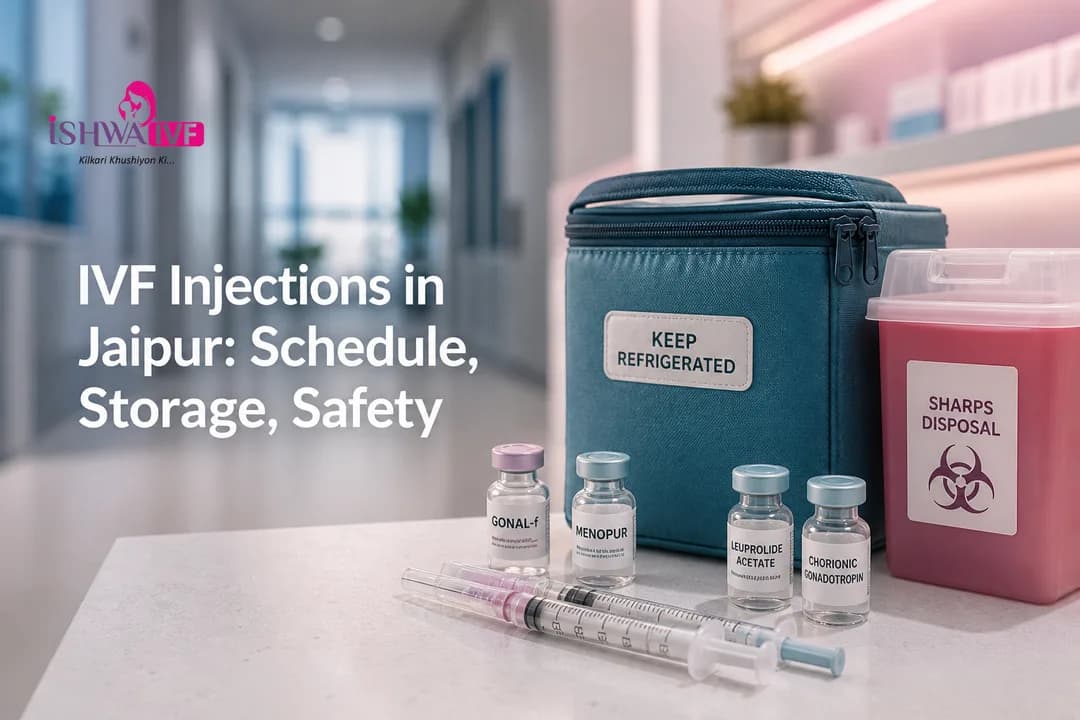
IVF Injections in Jaipur: Schedule, Storage, Safety can feel like the most intimidating part of IVF, especially if you have never self-injected before. In this guide, we break down what your medication calendar may look like, how to store each drug safely, and what to do if you miss a dose. Most importantly, you will learn practical steps that make injections calmer, cleaner, and more predictable.
Why IVF Injections Matter for a Strong Cycle
First, injections help your ovaries grow multiple follicles in a controlled way. That extra control gives your fertility specialist more eggs to work with during ovum pickup. As a result, many couples get more than one embryo for transfer or freezing.
However, injection timing matters because each medicine supports a specific hormone signal. If you take a dose too early or too late, your body may respond differently. Therefore, most clinics set a clear time window and ask you to stick to it daily.
In our day-to-day work at Ishwa IVF, we notice a simple pattern. Couples who set up a small “med corner” at home make fewer mistakes. In addition, they feel less anxious by day three. That kind of practical routine often matters as much as motivation.
Your Medication Plan Will Differ by Protocol
Typically, your doctor selects a protocol based on age, AMH, antral follicle count, and past response. For example, some patients do well with an antagonist protocol. Others need a different approach to prevent premature ovulation.
Meanwhile, you may also take tablets or supplements alongside injections. Because of this, it helps to keep one written chart on the fridge. You can also keep the same chart on your phone for quick checks.
Common IVF Injection Types You May See
Most stimulation plans include one or more of these categories. Importantly, brand names vary, but the purpose stays similar across clinics.
- Gonadotropins (FSH or FSH/LH) to stimulate follicle growth
- GnRH antagonist to prevent early ovulation during stimulation
- Trigger injection (hCG or GnRH agonist) to mature eggs before pickup
- Luteal support (often progesterone) to support implantation after transfer
IVF Injections: A Week-by-Week Schedule to Expect
IVF Injections usually follow a rhythm, even though the exact days can differ. First, you start stimulation early in the cycle. Next, you add an ovulation-prevention injection when follicles reach a certain size. Finally, you take a trigger shot at a precise time before egg retrieval.
Notably, your clinic adjusts doses after ultrasounds and hormone tests. Because of this, you should treat the plan as “live” rather than fixed. In other words, follow the latest written instructions you received.
A Practical Timeline (Typical Example)
First, you may begin stimulation injections on day 2 or day 3 of your period. Then you return for monitoring scans after a few days. As a result, your doctor can fine-tune the dose based on follicle growth.
Next, many patients add an antagonist injection around mid-stimulation. Importantly, that add-on helps prevent a spontaneous LH surge. Therefore, it supports correct timing for egg collection.
Finally, you take the trigger injection at a very specific hour. After that, ovum pickup often happens about 34–36 hours later. This timing is a standard clinical practice described widely in reproductive medicine guidance and training materials.
Storage, Travel, and Injection Safety at Home
Safe handling protects both your health and the potency of the medication. Therefore, always follow the storage directions on the box and your clinic’s written note. If your medicine needs refrigeration, keep it in the middle shelf, not the door.
In addition, never freeze medicines unless the label clearly says you can. Freezing can damage proteins in many injectable hormones. Because of this, a medicine that looks “fine” can still lose effectiveness.
For broader injection safety, the World Health Organization guidance on injection safety highlights clean technique and safe disposal. Similarly, your clinic may provide a sharps container or a safer disposal plan. If you feel unsure, ask for a quick demonstration during a monitoring visit.
When you travel within Jaipur or nearby areas, plan ahead. For example, carry an insulated pouch with a cold pack for temperature-sensitive vials. Also, keep medicines in original packaging because labels help avoid confusion at dosing time.
- Wash hands for at least 20 seconds before prep
- Clean the injection site with an alcohol swab and let it dry
- Use a new needle every time and never share supplies
- Rotate sites to reduce bruising and tenderness
- Dispose of needles in a puncture-resistant container
Side Effects, Missed Doses, and When to Call Your Doctor
Most patients notice mild bloating, mood swings, breast tenderness, or small bruises at the injection site. However, severe pain, rapid weight gain, or shortness of breath needs prompt medical advice. Those symptoms can signal ovarian hyperstimulation syndrome in some cases.
Importantly, results vary depending on ovarian reserve, PCOS, endometriosis, sperm factors, and embryo quality. Therefore, no clinic can promise pregnancy from any single cycle. Still, careful monitoring and clear communication reduce avoidable risks.
For a plain-language overview of infertility care and how treatment pathways differ, you can also review the WHO infertility fact sheet. It explains that infertility is a medical condition, and it often involves both male and female factors.
If You Miss or Mistime a Dose
First, do not double up unless your fertility doctor tells you to. Next, note the exact time you remembered and what you took. Then call the clinic with that information, because the correct fix depends on the medicine type.
For example, timing around the trigger shot often matters more than timing early in stimulation. Consequently, clinics treat trigger timing as a top priority. If you think you injected the wrong medicine, bring the packaging for verification.
Also, watch for dosing errors linked to similar-looking vials. In our clinic workflow, we often prevent this with two checks. First, the patient reads the label out loud. Second, a partner confirms the dose on the written schedule.
How Ishwa IVF Supports You Through IVF in Jaipur
Medication days can feel repetitive and emotionally heavy. Because of this, good support is both medical and practical. At Ishwa IVF, we focus on clear written schedules, scan-based dose adjustments, and hands-on teaching for self-injections.
In addition, our team helps you plan around work hours and local travel. You can explore services and patient support resources through Ishwa IVF Clinic in Jaipur. You can also start by checking fertility treatment options at Ishwa IVF if you want a simple overview before your first visit.
Finally, remember that you do not need to “be brave” every day. Instead, you need a repeatable routine and quick access to guidance when doubts come up. If you want help building that routine, schedule a consult and bring your medication list.
IVF Injections in Jaipur: Schedule, Storage, Safety becomes much easier when you understand the “why” behind each shot and follow a clean, timed system. If you are preparing for IVF or a second opinion, our team can walk you through your plan without pressure, while keeping decisions in your hands.
Contact Us
Ishwa IVF Clinic
1st Floor, Ganga Heights, Tonk Road
(Near Gopalpura Flyover, Opposite Jaipur Hospital)
Kailash Puri Colony, Jaipur – 302018
📞 Phone: 9351333705
Written and medically reviewed by Dr. Urmila Sharma and Dr. Zeepee Godha. This article is general information and does not replace a consultation. Your doctor will advise you on your own situation.