IVF Pregnancy Care: First Trimester Risks And Tips


Written and medically reviewed by
Dr. Urmila Sharma and Dr. Zeepee Godha
7 min read
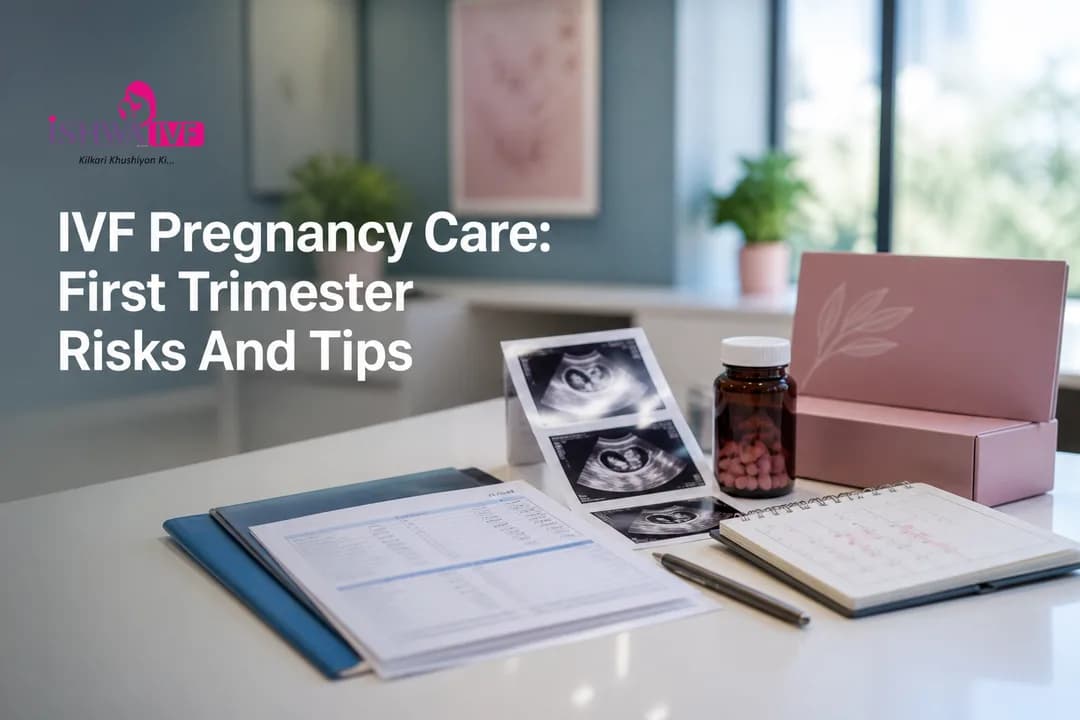
If you have conceived through IVF, the first trimester can feel both joyful and fragile. This guide, Pregnancy Care After IVF: First Trimester Risks and Tips, explains practical IVF pregnancy care steps, what risks matter most early on, and when to contact your fertility doctor for reassurance or urgent help.
Why The First Trimester Feels Different After IVF
First, IVF pregnancies often come after months or years of infertility treatment. Because of that, many people track every symptom closely. That level of attention is normal, and it can also increase stress.
Importantly, early pregnancy after embryo transfer usually includes planned hormone support. You may take progesterone and sometimes estrogen. Therefore, symptoms like breast tenderness, bloating, and fatigue can feel stronger.
In our work at Ishwa IVF, we repeatedly see that reassurance improves outcomes indirectly. It helps patients sleep better, eat consistently, and follow medicines on time. In addition, early, structured follow-ups reduce panic visits and missed warning signs.
IVF Pregnancy Care: Key First Trimester Risks To Know
Second, it helps to know the specific early risks that fertility specialists monitor. The goal is not to scare you. Instead, it helps you act early if something changes.
Early Bleeding, Subchorionic Hematoma, And Miscarriage
Light spotting can happen in early pregnancy, including after IVF. However, bleeding can also signal problems like a threatened miscarriage or a subchorionic hematoma. Therefore, you should report any bleeding to your fertility clinic, even if it stops.
The risk of miscarriage depends heavily on factors like maternal age, embryo genetics, and prior pregnancy history. Notably, genetic factors play a large role in first-trimester losses. For example, a fact sheet from the World Health Organization on spontaneous abortion explains that miscarriage is common and often linked to chromosomal issues, especially in the first trimester.
That said, a single symptom cannot predict an outcome. In fact, many pregnancies continue normally after mild spotting. Still, you should get timely guidance, because the safest plan depends on your scan findings.
Ectopic And Heterotopic Pregnancy: Rare But Serious
Although IVF places an embryo into the uterus, ectopic pregnancy can still occur. In rare cases, a heterotopic pregnancy can happen. That means one pregnancy implants in the uterus and another outside it.
Consequently, your clinic will schedule early ultrasounds to confirm the gestational sac location. If you have one-sided pelvic pain, shoulder tip pain, dizziness, or heavy bleeding, seek urgent care. Those symptoms need immediate evaluation.
Multiple Pregnancy And Its Follow-Up
Some IVF cycles result in twins, especially when more than one embryo is transferred. Therefore, early scans focus on the number of sacs, fetal heartbeats, and chorionicity. Chorionicity guides risk planning for later pregnancy.
Multiple pregnancy can increase the chance of complications. For instance, it can raise the risk of preterm birth and pregnancy-induced hypertension. As a result, your fertility specialist may coordinate earlier high-risk pregnancy care planning.
Why Your Scan Schedule May Be More Frequent
After IVF, clinics often schedule an early viability scan. Next, they repeat scans to confirm growth and heartbeat trends. This frequency supports safety and reduces uncertainty, especially for those with prior losses.
Week-By-Week Monitoring And Tests You Can Expect
Next, let’s map what most patients experience in the first trimester. Protocols vary by fertility clinic, your fertility doctor, and your medical history. However, the overall process stays similar.
Typically, clinics check beta-hCG trends early. They also review thyroid status, blood sugar, and other risk factors. After that, ultrasound confirms location and viability.
- Early blood tests: beta-hCG and sometimes progesterone to assess trend.
- First ultrasound: confirms intrauterine pregnancy and gestational age.
- Follow-up ultrasound: checks fetal heartbeat and appropriate growth.
- First-trimester screening: your obstetric team may advise NT scan and blood tests.
- Risk-based labs: thyroid, vitamin D, HbA1c, or clotting tests when indicated.
Importantly, your doctor will interpret tests in context. For example, “normal” beta-hCG varies widely. Therefore, the rate of rise matters more than any single value.
For patient safety standards, public health systems also emphasize structured antenatal care. You can review India’s national digital health resources at the National Health Authority, which supports broader care continuity and verified health services access.
Practical Tips For A Safer, Calmer First Trimester
Meanwhile, day-to-day choices can support a steadier early pregnancy. These tips fit most IVF pregnancies. Still, your own plan should follow your fertility specialist, especially if you have high risk pregnancy factors.
Medications, Progesterone Support, And Common Mistakes
First, take your medicines at the same time every day. If you use vaginal progesterone, use it as prescribed and do not skip doses. Similarly, if you use injections, follow correct storage and technique.
Second, do not stop hormones on your own after a positive test. Many patients feel better and assume they can discontinue. However, your clinic will taper or stop support based on gestational timing and scan results.
- Set phone alarms for progesterone and other medicines.
- Tell your clinic about side effects like severe itching or rash.
- Ask before adding supplements, herbs, or painkillers.
- Keep a simple medication log for clarity during visits.
In addition, talk to your doctor before using aspirin, heparin, or “blood thinner” therapy. Some patients need it due to specific indications. Others do not, and unnecessary use can increase bleeding risk.
Food, Hydration, And Safe Activity
Most people can eat a normal balanced diet after IVF. Focus on regular meals, protein, fruits, vegetables, and whole grains. Also, stay hydrated, because dehydration can worsen dizziness and constipation.
For activity, gentle walking often helps. However, avoid new high-impact workouts in the first trimester. If you had ovarian hyperstimulation risk or significant ovarian enlargement, your clinic may limit exercise for a short time.
Furthermore, manage nausea early. Small frequent meals, ginger in food, and prescribed anti-nausea medicines can help. If you cannot keep fluids down for a full day, call your clinic.
Managing Anxiety After Infertility Treatment
After infertility treatment, anxiety can spike between scans. Therefore, create a plan for “in-between days.” For example, limit repeated home pregnancy testing, which rarely provides useful new information.
Instead, track only what matters. Notably, hydration, sleep, and medication adherence matter more than symptom hunting. In contrast, scrolling worst-case stories at night can raise cortisol and worsen insomnia.
If worry feels constant, consider brief counselling support. Many couples benefit from guided coping strategies. As a result, they feel more present during pregnancy.
When To Call Your Fertility Doctor Immediately
Finally, clear red flags help you act fast. If you are unsure, it is safer to call and be reassured. That is especially true early after a test tube baby pregnancy, ICSI cycle, or frozen embryo transfer.
- Heavy bleeding, passage of clots, or soaking pads quickly
- Severe abdominal pain, one-sided pelvic pain, or shoulder tip pain
- Fainting, severe dizziness, or shortness of breath
- High fever or chills
- Persistent vomiting with inability to drink fluids
At the same time, remember that results vary depending on age, embryo quality, underlying female infertility or male infertility factors, and overall reproductive health. Therefore, two IVF pregnancies can feel very different and still be normal.
If you want personalised planning, a fertility clinic can coordinate early obstetric care and high risk pregnancy follow-up when needed. You can also explore support options with Ishwa IVF or review how our team approaches patient-first follow-up at our IVF Center in Jaipur.
Most importantly, consistent IVF pregnancy care in the first trimester focuses on scans, safe medicines, and early action on warning signs. With the right monitoring and support, many patients move from fear to steady confidence, one week at a time.
Contact Us
Ishwa IVF Clinic
1st Floor, Ganga Heights, Tonk Road
(Near Gopalpura Flyover, Opposite Jaipur Hospital)
Kailash Puri Colony, Jaipur – 302018
📞 Phone: 9351333705
As a dedicated fertility and reproductive healthcare team, we support patients through IVF, IUI, ICSI, and early pregnancy follow-up with careful protocols and compassionate counselling. If you are newly pregnant and need clarity, you can call us for a non-judgmental discussion and the next best step.
Written and medically reviewed by Dr. Urmila Sharma and Dr. Zeepee Godha. This article is general information and does not replace a consultation. Your doctor will advise you on your own situation.