ICSI for Poor Sperm Morphology: Success, Risks, Cost


Written and medically reviewed by
Dr. Urmila Sharma and Dr. Zeepee Godha
7 min read
ICSI for Poor Sperm Morphology: Success, Risks, Cost is a common topic we discuss with couples who feel stuck after repeated “normal” reports except one line: morphology. If you are exploring ICSI for poor sperm morphology, this guide explains what the results mean, when ICSI helps, what risks to consider, and how cost is usually planned in Jaipur. Most importantly, you will learn what to ask your fertility specialist before you start.
Why Morphology Matters More Than A Single Number
First, sperm morphology describes how many sperm have a “typical” head, midpiece, and tail shape. In practice, the lab checks a stained semen sample and reports the percentage of normal forms. Because morphology assessment is strict, the “normal” percentage often looks low even when other parameters look fine.
However, morphology alone does not tell the whole fertility story. Fertilization also depends on motility, count, DNA integrity, and egg quality. Therefore, most fertility doctors interpret morphology alongside your complete infertility treatment workup, including female factors.
Importantly, morphology numbers can vary between labs and even between samples. For that reason, many specialists repeat the semen analysis before making a final plan. You can also ask whether the lab uses strict Kruger criteria, because that method commonly informs ICSI decisions.
What “Poor Morphology” Can Signal
Notably, abnormal forms can appear with varicocele, infection, oxidative stress, smoking, heat exposure, or long gaps between ejaculations. In addition, some men show low morphology without any clear cause. That situation can feel frustrating, yet it is common in male infertility clinics.
Meanwhile, some couples conceive naturally despite low morphology. Others face low fertilization with IUI or standard IVF. Consequently, the best approach depends on your history, your partner’s age, and how long you have tried.
A Practical Point From Fertility Labs
In our work with couples undergoing IVF and ICSI, we repeatedly see one pattern. Morphology often triggers anxiety, yet the bigger predictor of day-to-day lab outcomes is the overall sperm function on that day. Therefore, we focus on repeat testing, good abstinence timing, and careful sample handling.
ICSI for Poor Sperm Morphology: How It Improves Fertilization
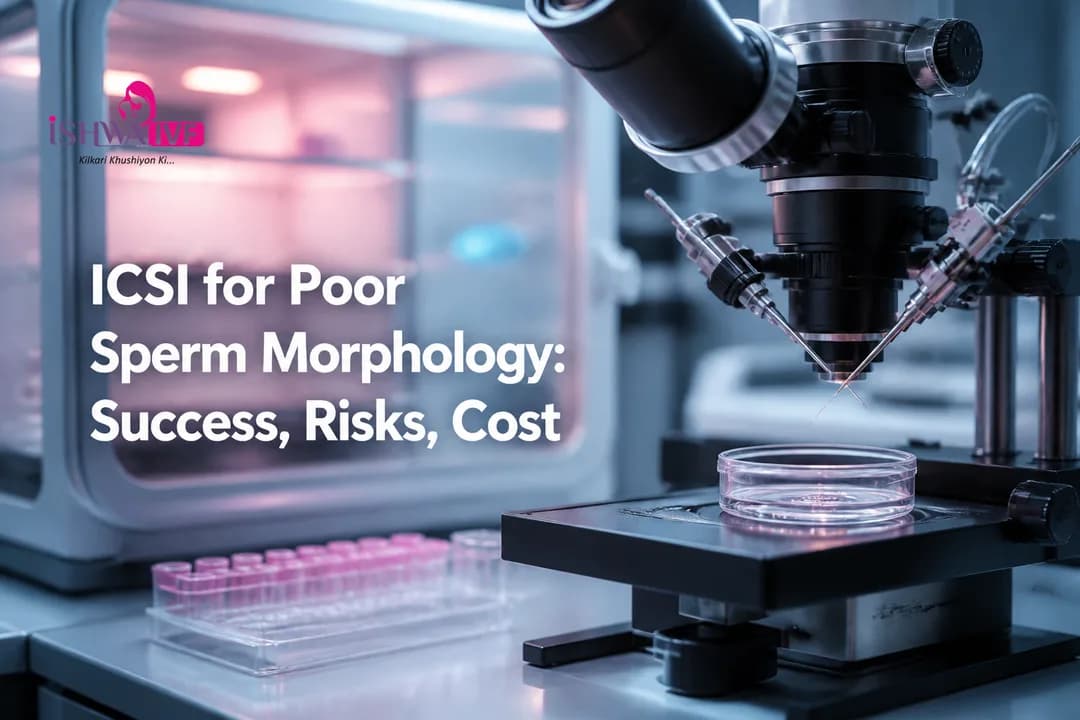
ICSI for poor sperm morphology means an embryologist selects a single motile sperm and injects it directly into a mature egg. As a result, ICSI can bypass steps that “misshapen” sperm may struggle with, such as binding to the egg’s outer layer and penetrating it.
For many couples, this is the main advantage. Standard IVF relies on sperm to fertilize the egg on their own in a dish. With severe morphology issues, fertilization can drop. Therefore, ICSI often becomes the preferred fertilization method within an IVF cycle.
That said, ICSI does not “repair” sperm DNA. So, if sperm DNA fragmentation is high, your doctor may add targeted steps. For example, they may advise antioxidants, lifestyle changes, varicocele evaluation, or sperm selection methods when appropriate.
What Happens In An ICSI Cycle (Simple Step-By-Step)
First, the female partner undergoes ovarian stimulation so multiple eggs can mature. Next, the clinic retrieves eggs through a short procedure, usually under anesthesia. On the same day, the male partner provides a semen sample, or the lab uses previously frozen sperm.
Then, the embryology team identifies mature eggs and performs microinjection. After that, embryos grow in controlled incubators. Finally, your fertility specialist plans a fresh or frozen embryo transfer based on endometrium readiness and medical safety.
According to the WHO laboratory manual for semen examination and processing, semen analysis requires standardized collection, processing, and reporting. Therefore, consistent lab methods matter when you compare reports across time or centers.
Success Rates And Realistic Expectations In Jaipur
Couples often search for “ICSI success” as if morphology alone decides it. In reality, pregnancy rates depend on several linked factors. Most importantly, female age and egg quality strongly affect embryo development, implantation, and miscarriage risk.
Still, ICSI can meaningfully improve fertilization when morphology is very low. Therefore, many clinics use it when there is a history of low fertilization with IVF, severe teratozoospermia, or limited sperm available.
However, outcomes vary. Two men can share the same morphology percentage, yet their fertilization results can differ. Consequently, a good clinic reviews prior cycle data, embryo development, and any male factor treatment already attempted.
What Most Strongly Influences Your Outcome
First, the number of mature eggs retrieved affects how many embryos you can create. Second, embryo culture conditions and lab quality shape blastocyst development. Third, uterus readiness, fibroids, polyps, or thin lining can affect implantation.
In addition, sperm DNA fragmentation can influence embryo quality and miscarriage risk in some cases. For a science-based overview of male infertility factors and treatment approaches, you can review the NCBI overview on male infertility. You can then discuss which tests truly apply to your situation.
- Female age and ovarian reserve (AMH, AFC)
- Egg maturity and stimulation response
- Embryology lab quality and culture systems
- Sperm DNA integrity, not morphology alone
- Uterine factors like polyps, fibroids, lining issues
In short, ICSI is a tool inside a broader fertility treatment plan. It improves the fertilization step, yet it cannot remove every barrier to parenthood. Therefore, your clinic should set expectations clearly and tailor the protocol to you.
Risks And Limitations You Should Know Before Choosing ICSI
ICSI is widely used and usually safe when performed by an experienced embryology team. Still, every medical procedure comes with trade-offs. Therefore, it helps to review the limitations before you commit.
First, not every egg survives microinjection. The embryologist inserts a fine needle, so a small percentage of eggs may degenerate. Second, ICSI may not help if embryo development fails mainly due to egg quality issues.
Importantly, doctors may recommend genetic counseling or testing in specific situations, such as severe male factor infertility or repeated pregnancy loss. For example, some couples consider PGT-A or other tests based on history. Your fertility doctor should explain whether that adds value in your case.
However, avoid anyone who “guarantees” outcomes. Results vary with age, diagnosis, and embryo quality. A trustworthy IVF center will talk through success chances in ranges and explain why.
When ICSI Might Not Be The Only Answer
Sometimes, morphology improves after treating a varicocele, stopping smoking, optimizing weight, or reducing heat exposure. Likewise, addressing infection or inflammation can help. Therefore, a male infertility consultation can run in parallel with IVF planning.
On the other hand, when time matters, many couples choose ICSI within IVF while also improving lifestyle factors. That approach can reduce delays and protect fertility when female age is a concern.
Cost Of ICSI In Jaipur: What Usually Changes The Final Bill
The cost of ICSI in Jaipur is not a single line item, because clinics bundle services differently. Usually, ICSI adds an extra lab fee on top of IVF. In addition, medicines, monitoring scans, anesthesia, and embryo freezing can change the total.
Therefore, ask for a written estimate that separates major components. You can also ask what is included in “package” pricing and what is billed separately. This clarity helps you compare clinics fairly and plan financing without stress.
If you want a place to start, you can speak with Ishwa IVF for a transparent breakdown. You can also review how an IVF center structures lab services, freezing options, and follow-up pregnancy care at our fertility clinic team.
Questions To Ask Before You Pay For An ICSI Cycle
First, confirm which steps are included in the quote. Next, clarify your likely add-ons based on your test results. Finally, confirm refund or cancellation terms if the cycle changes for medical reasons.
- What does the package include: stimulation monitoring, retrieval, ICSI, culture, and transfer?
- Are embryo freezing and storage included, and for how long?
- What extra costs apply for TESE, donor sperm, or advanced sperm selection if needed?
- What happens if no eggs are retrieved or no embryos form?
- Will the clinic recommend IUI or standard IVF first in my case, and why?
Notably, the “right” plan balances medical need with cost. A good fertility specialist will justify ICSI based on your reports and past outcomes, not only on routine protocol.
Conclusion: Turning A Report Into A Clear Plan
Low morphology can feel like a dead end, yet it often becomes a solvable part of your infertility treatment plan. With the right evaluation, an experienced lab, and realistic expectations, many couples move forward with confidence. If you are considering ICSI for poor sperm morphology, focus on the whole picture: egg factors, sperm DNA health, uterine readiness, and lab quality.
At Ishwa IVF, we work as a hands-on team across IVF, ICSI, male infertility, gynecology, and pregnancy care. We also explain every step in plain language, so you can choose calmly and safely. Results vary for each couple, so we invite you to book a consultation for an individualized plan rather than a one-size-fits-all promise.
Contact Us
Ishwa IVF Clinic
1st Floor, Ganga Heights, Tonk Road
(Near Gopalpura Flyover, Opposite Jaipur Hospital)
Kailash Puri Colony, Jaipur – 302018
📞 Phone: 9351333705
Written and medically reviewed by Dr. Urmila Sharma and Dr. Zeepee Godha. This article is general information and does not replace a consultation. Your doctor will advise you on your own situation.