ICSI Or IMSI With IVF: When Poor Sperm Needs Help


Written and medically reviewed by
Dr. Urmila Sharma and Dr. Zeepee Godha
8 min read
If you have been told that sperm quality may affect fertilisation, the decision can feel urgent and confusing. In this guide on ICSI or IMSI with IVF: When Poor Sperm Needs Support, we explain how IVF ICSI works, when extra lab support helps, and what questions to ask your fertility doctor before your cycle starts. Importantly, the “best” method depends on your reports, your egg factors, and your previous outcomes.
Why Poor Sperm Changes The IVF Plan
In many couples, the egg and sperm meet easily in the lab dish. However, when semen parameters fall, fertilisation can drop. As a result, your fertility specialist may recommend more targeted methods than conventional insemination.
At Ishwa IVF, we often see couples arrive after months of supplements, lifestyle changes, and repeat semen tests. Notably, some reports improve, yet the key challenge remains: getting a healthy sperm to fertilise a mature egg at the right moment.
Because of this, your fertility treatment plan may shift from standard IVF to microinjection techniques. This step does not “fix” sperm production. Instead, it supports fertilisation inside the IVF lab when sperm struggle to reach or enter the egg.
What “Poor Sperm” Usually Means In Reports
Semen analysis typically looks at sperm count, motility, and morphology. In addition, many labs report volume, pH, and the presence of infections or high numbers of round cells. Your fertility doctor reads the full pattern, not one value.
For example, low motility can reduce the chance that sperm will reach the egg on its own. Similarly, very abnormal morphology can signal difficulty in binding to the egg’s outer layer. Therefore, fertilisation methods matter.
Male Infertility Is Often Treatable Or Bypassable
Many male infertility causes respond to targeted treatment. For instance, a urologist may address varicocele, infections, or hormonal imbalances. Still, when time is limited or the semen pattern stays poor, assisted fertilisation can help you move forward.
In fact, the WHO laboratory manual for semen analysis explains how labs measure key semen parameters and why proper assessment matters. That standardised testing supports better decisions about IVF, IUI, or ICSI.
IVF ICSI: How It Works And Who Benefits Most
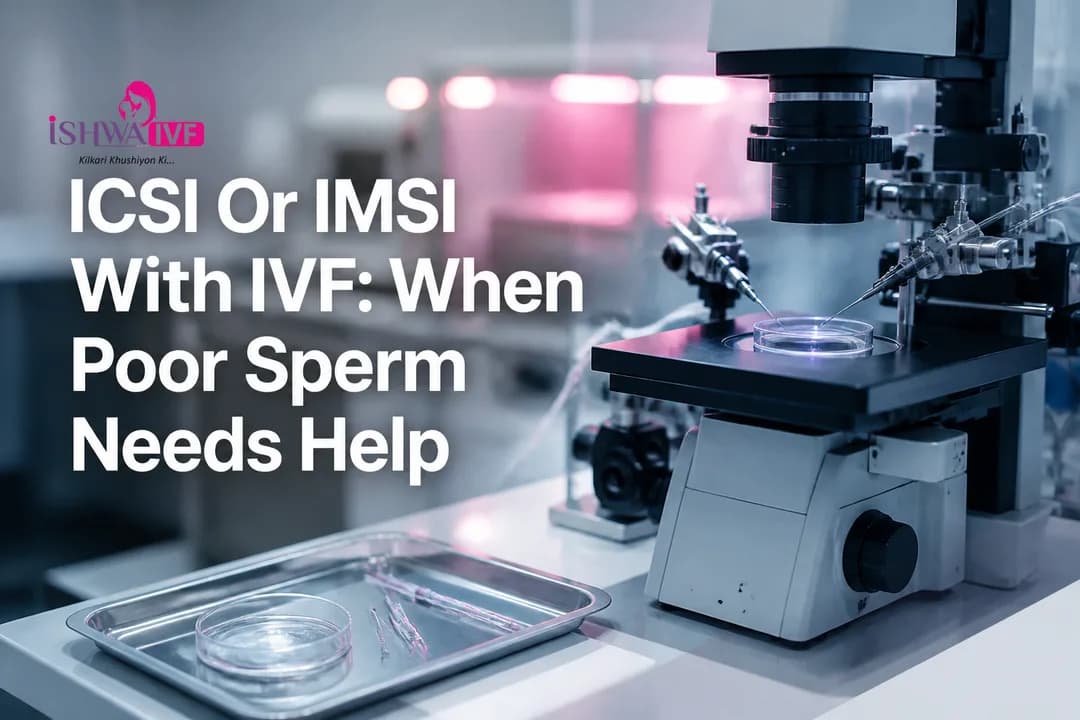
IVF ICSI stands for intracytoplasmic sperm injection. In simple terms, an embryologist selects a single sperm and injects it directly into a mature egg. Consequently, the method bypasses several steps that can fail with weak motility or poor morphology.
ICSI is not a separate fertility treatment from IVF. Rather, it is a fertilisation method used within IVF. After fertilisation, embryo growth and embryo transfer follow the usual IVF timeline.
At the lab level, ICSI requires careful egg handling and precise micromanipulation. Therefore, clinic experience and lab quality play a big role in outcomes.
When Fertility Specialists Recommend ICSI
Doctors often advise ICSI when semen parameters suggest a high risk of low fertilisation with conventional IVF. Additionally, ICSI may help when sperm are retrieved surgically, such as from the epididymis or testis, because these sperm may not swim strongly.
Clinics also consider ICSI in these situations:
- Very low sperm count or very low motility
- Severe morphology issues on repeated testing
- Previous IVF cycle with low or no fertilisation
- Use of frozen sperm samples or limited sperm numbers
- Need for fertilisation certainty when egg numbers are low
However, ICSI is not automatically better for everyone. If sperm parameters look normal, conventional IVF may still work well. Your fertility specialist should explain why they recommend one approach for your case.
What ICSI Can And Cannot Solve
ICSI can overcome problems with sperm reaching or penetrating the egg. On the other hand, it cannot repair sperm DNA damage or egg quality issues. Therefore, your doctor may also discuss tests or strategies for DNA fragmentation, oxidative stress, or egg-related factors.
IMSI In IVF: When Extra Sperm Selection May Matter
IMSI stands for intracytoplasmic morphologically selected sperm injection. It uses a higher magnification system than standard ICSI. As a result, the embryologist can examine sperm head shape in finer detail before choosing the sperm for injection.
In practice, IMSI aims to improve selection when morphology looks severely abnormal or when couples face repeated failures. However, it may not be necessary for every patient. Availability also depends on lab setup and team expertise.
Importantly, the evidence for IMSI benefits varies across patient groups. So, a good clinic will discuss whether IMSI fits your exact history rather than selling it as an upgrade.
Who Might Consider IMSI
IMSI may be discussed when standard selection under ICSI does not feel sufficient. For example, couples with repeated implantation failure or repeated poor embryo development sometimes ask about advanced sperm selection. Similarly, very severe morphology concerns can prompt this conversation.
That said, sperm appearance alone does not fully reflect genetic health. Therefore, your fertility doctor may combine the discussion with DNA fragmentation testing or lifestyle optimisation steps.
How IMSI Differs From Other “Sperm Sorting” Options
IMSI focuses on detailed visual selection during microinjection. In contrast, some labs also use techniques that select sperm based on motility, binding, or density. Each tool targets a different issue.
Notably, there is no single “best” method for all male infertility cases. Instead, a fertility clinic should match the method to the suspected bottleneck. That approach supports better IVF success rates over time.
Choosing Between ICSI And IMSI: A Practical Clinic Checklist
When you compare ICSI and IMSI, start with your diagnosis and your previous cycle history. Next, look at the lab’s strengths, because micromanipulation results depend on technique. Finally, consider your full fertility picture, including female infertility factors.
In our day-to-day work with IVF cycles, we repeatedly see one pattern: couples focus only on the semen report, and they miss egg maturity and timing. However, fertilisation depends on both sides. Therefore, we review stimulation response, egg maturity rates, and sperm preparation together before we recommend a method.
Use this checklist to guide the conversation with your fertility doctor:
- Clarify the goal: Are you trying to avoid fertilisation failure, or trying to improve embryo quality after past issues?
- Review prior outcomes: How many eggs fertilised last time, and how did embryos develop to day 3 or blastocyst stage?
- Ask about sperm source: Is sperm from ejaculate, frozen sample, or surgical retrieval like TESE?
- Discuss lab methods: What selection and culture systems does the IVF center use, and how do they track quality?
- Check for add-ons: If IMSI is suggested, ask what specific concern it addresses in your case.
Also, ask your clinic how they handle borderline situations. Sometimes a split approach helps, where a portion of eggs undergo conventional IVF and others undergo ICSI. That plan can protect fertilisation while still using a less invasive method where appropriate.
For broader reproductive health context, you can review patient-focused information from public health bodies. For example, the WHO infertility overview explains infertility as a medical condition and outlines common causes in men and women. Similarly, India’s National Health Authority provides national-level health system resources that help patients understand care pathways.
What To Expect At An IVF Center When ICSI Or IMSI Is Planned
Once your team plans microinjection, you will still follow the familiar IVF steps: ovarian stimulation, monitoring, egg retrieval, sperm collection, fertilisation, embryo culture, and embryo transfer. However, the lab workflow changes on fertilisation day.
First, the embryology team checks egg maturity. Next, they prepare sperm and select the best available cells for injection. After that, they inject each mature egg and watch for fertilisation signs the next day.
Because results vary, your doctor may recommend blastocyst culture, embryo freezing, or a fresh transfer based on hormone levels and endometrial readiness. In addition, pregnancy care planning matters, especially for patients with PCOS, thyroid issues, or a history of high risk pregnancy.
Also, consider fertility preservation if timing matters. If you face delayed plans, egg freezing or embryo freezing can protect options. Your fertility specialist can explain which choice suits your age and diagnosis.
Finally, keep expectations realistic. Even with excellent lab work, outcomes depend on age, egg quality, sperm DNA integrity, uterine factors, and embryo genetics. Therefore, no fertility clinic can guarantee parenthood. What a strong clinic can offer is clear reasoning, careful lab practice, and honest follow-up after every cycle.
If you are weighing IVF ICSI or IMSI, a focused review of both partners’ reports often brings clarity. You can also explore how our team at Ishwa IVF approaches male and female infertility together, or learn what to bring to your first visit through our fertility clinic consultation process.
Conclusion: Matching The Method To The Cause
ICSI and IMSI can make a real difference when sperm need extra support inside the lab. However, the best choice depends on your semen pattern, egg factors, and prior IVF outcomes. In short, IVF ICSI is a strong option when fertilisation risk looks high, while IMSI may help in select cases where detailed sperm selection fits the clinical story.
As a dedicated fertility clinic, Ishwa IVF uses day-to-day clinical and lab experience to tailor fertilisation methods to each couple, while keeping decisions transparent and evidence-led. If you want a calm, non-rushed plan, book a consultation so we can review your reports and explain options without pressure.
Contact Us
Ishwa IVF Clinic
1st Floor, Ganga Heights, Tonk Road
(Near Gopalpura Flyover, Opposite Jaipur Hospital)
Kailash Puri Colony, Jaipur – 302018
📞 Phone: 9351333705
Written and medically reviewed by Dr. Urmila Sharma and Dr. Zeepee Godha. This article is general information and does not replace a consultation. Your doctor will advise you on your own situation.